
Needlepoint vs Cross Stitch: What's the Difference?
If you've ever wondered about the difference between needlepoint vs cross stitch, you're not alone. While both are popular forms of embroidery and involve stitching with a needle and thread, they are two distinct crafts with different materials, techniques, and finished results.
Understanding the difference between needlepoint and cross stitch can help you choose the craft that best suits your interests, skill level, and the type of projects you want to create. Whether you're looking for a relaxing hobby, a creative outlet, or a new way to make handmade décor, both crafts offer unique advantages.
In this guide, we'll compare needlepoint vs cross stitch in detail, including their materials, stitches, difficulty, time commitment, and which one may be the better choice for beginners.
What Is Needlepoint?
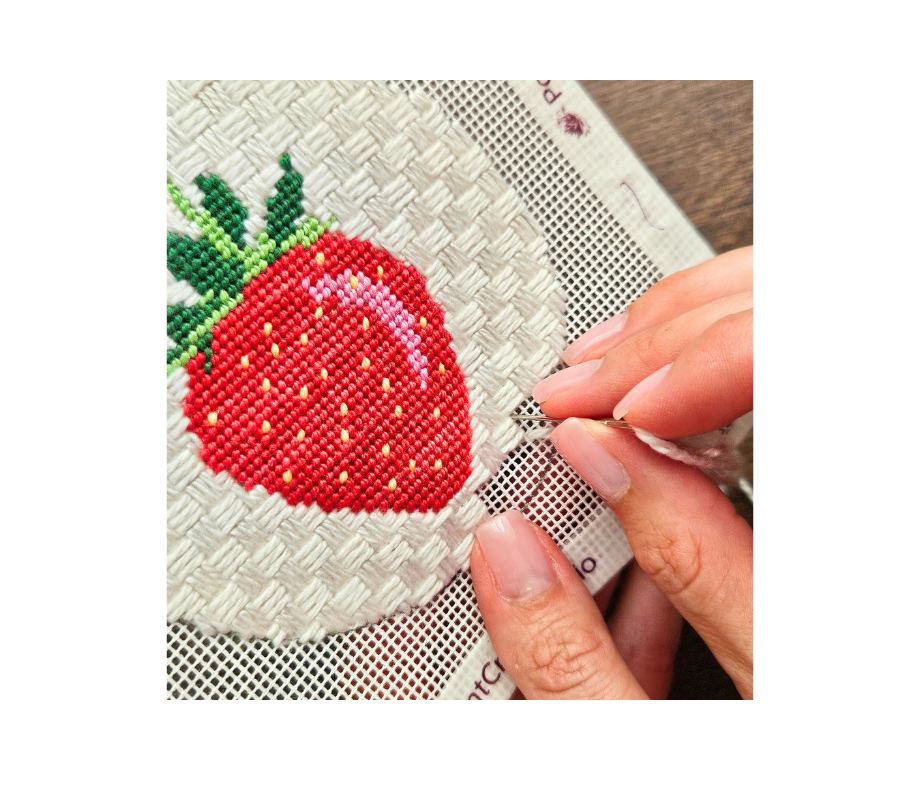
Needlepoint is a form of canvas embroidery worked on a stiff, open-weave canvas. Unlike cross stitch, which relies on counted patterns, many needlepoint projects use hand-painted or printed canvases that show exactly where each stitch belongs.
Although the basic tent stitch is the most commonly used stitch in needlepoint, the craft also includes a wide variety of decorative stitches that create texture, depth, and visual interest. This flexibility allows stitchers to personalize each project and add dimension that isn't possible with a single stitch style.
Needlepoint is commonly used to create:
-
Decorative pillows
-
Christmas ornaments
-
Wall art
-
Eyeglass cases
-
Bookmarks
-
Holiday stockings
-
Home décor accessories
Because the canvas is sturdy and the stitches completely cover the surface, finished needlepoint projects are known for their durability and longevity.
What Is Cross Stitch?
Cross stitch is a counted form of embroidery that uses X-shaped stitches worked on evenly woven fabric, most commonly Aida cloth. Instead of following a painted canvas, stitchers count the holes in the fabric and follow a printed chart or digital pattern.
Each X-shaped stitch represents one square on the pattern, allowing highly detailed images to be created with careful counting and placement.
Cross stitch is often used for:
-
Framed artwork
-
Samplers
-
Quotes and sayings
-
Floral designs
-
Seasonal decorations
-
Personalized gifts
Accuracy is important in cross stitch because a single counting mistake can affect the entire design.
Needlepoint vs Cross Stitch: The Biggest Differences
Although both crafts use a needle and thread, the differences become clear once you begin stitching.
| Feature | Needlepoint | Cross Stitch |
|---|---|---|
| Fabric | Open-weave canvas | Aida or evenweave fabric |
| Main Stitch | Tent stitch and decorative stitches | X-shaped cross stitches |
| Pattern | Often painted or printed on the canvas | Counted chart or pattern |
| Counting Required | Minimal | Constant counting |
| Texture | Rich, textured surface | Smooth, uniform appearance |
| Design Flexibility | Many stitch variations | Primarily one stitch style |
| Finished Projects | Home décor and accessories | Framed art and decorative pieces |
The biggest difference between needlepoint and cross stitch is how the design is created. Needlepoint usually provides visual guidance directly on the canvas, while cross stitch requires careful counting throughout the project.
Needlepoint vs Cross Stitch: Which Is Easier?
Many beginners ask whether needlepoint or cross stitch is easier to learn.
The answer depends on the type of stitching experience you enjoy.
Needlepoint is often considered easier for beginners because many canvases are painted or printed. Instead of constantly counting stitches, you simply stitch the colors shown on the canvas. This allows new stitchers to focus on developing consistent stitches without worrying about losing their place in a chart.
Cross stitch, on the other hand, requires careful counting from beginning to end. While the basic X stitch is simple to master, maintaining accuracy across a large pattern takes patience and concentration.
Neither craft is inherently more difficult, but they challenge different skills. Needlepoint emphasizes stitch technique and creativity, while cross stitch emphasizes precision and counting.
Which Craft Takes Longer?
Project length depends more on design size and complexity than on the craft itself.
Needlepoint often uses thicker threads and larger canvas mesh, allowing each stitch to cover more area. However, decorative stitches and complete canvas coverage can increase the overall stitching time.
Cross stitch typically uses smaller stitches, especially on higher-count fabrics, which can require thousands of individual stitches to complete detailed designs.
A small project in either craft may take only a few hours, while larger heirloom pieces can require weeks or even months of stitching.
Is Needlepoint More Expensive Than Cross Stitch?
In general, needlepoint tends to have a higher overall cost than cross stitch.
Hand-painted canvases require skilled artistry before stitching even begins, making them more expensive than printed cross stitch charts. Needlepoint projects may also involve specialty threads and professional finishing for items such as pillows or ornaments.
Cross stitch patterns are often available as printed charts or downloadable designs, making it easier to begin with a lower initial investment.
However, the total cost of either hobby depends on the size and complexity of the project rather than the craft itself.
Can You Switch Between Needlepoint and Cross Stitch?
Absolutely.
Many stitchers enjoy both crafts because they share similar foundational skills, including thread management, tension control, and stitching techniques.
If you already enjoy cross stitch, learning needlepoint is often a natural progression. Likewise, needlepoint stitchers usually adapt quickly to cross stitch after becoming comfortable with reading counted patterns.
Exploring both crafts allows stitchers to experience different creative styles while building confidence and developing new skills.
Needlepoint vs Cross Stitch: Which One Should You Choose?
Choosing between needlepoint vs cross stitch comes down to personal preference.
Choose needlepoint if you:
-
Prefer working on a printed or painted canvas
-
Enjoy textured decorative stitches
-
Like creating home décor and heirloom pieces
-
Want more freedom in stitch selection
Choose cross stitch if you:
-
Enjoy following counted patterns
-
Like creating detailed pictures and lettering
-
Prefer a uniform stitched appearance
-
Find satisfaction in precise, repetitive stitching
Neither craft is better than the other—they simply offer different creative experiences.
Frequently Asked Questions
Is needlepoint the same as cross stitch?
No. While both are forms of embroidery, needlepoint is stitched on canvas using a variety of stitches, whereas cross stitch uses X-shaped stitches on evenly woven fabric following a counted pattern.
Is needlepoint harder than cross stitch?
Not necessarily. Needlepoint often requires less counting, while cross stitch demands greater accuracy when following charts. Each craft presents different challenges.
Why is needlepoint usually more expensive?
Needlepoint canvases are often hand-painted, and many finished pieces require additional craftsmanship, which can increase the overall cost.
Can you cross stitch on needlepoint canvas?
Technically, yes, but it is generally not recommended. Needlepoint canvas is designed for different stitch types and does not provide the same appearance or accuracy as traditional cross stitch fabric.
Which is better for beginners?
Many beginners find needlepoint easier because painted canvases reduce the amount of counting required. Others prefer cross stitch because it uses a single, repetitive stitch throughout the project. The best choice depends on your preferred learning style.
Final Thoughts
When comparing needlepoint vs cross stitch, there isn't a universal winner. Both crafts offer a relaxing, rewarding way to create beautiful handmade pieces, but they differ in technique, materials, and the overall stitching experience.
If you enjoy creativity, textured stitches, and working directly from a painted canvas, needlepoint may be the perfect fit. If you appreciate precision, counted patterns, and detailed designs built one stitch at a time, cross stitch is an excellent choice.
Whichever craft you choose, you'll be joining a centuries-old tradition of embroidery that continues to inspire makers around the world.