
Printed vs. Hand-Painted vs. Stitch-Painted Needlepoint Canvas: What’s the Difference?
If you're new to needlepoint, choosing a needlepoint canvas can be more complicated than it first appears.
You may see terms like printed canvas, hand-painted canvas, and stitch-painted canvas when shopping for your next project. While all three can be used for needlepoint, they offer very different experiences for the stitcher.
So, what is the difference between a printed and hand-painted needlepoint canvas? And what exactly does stitch-painted mean?
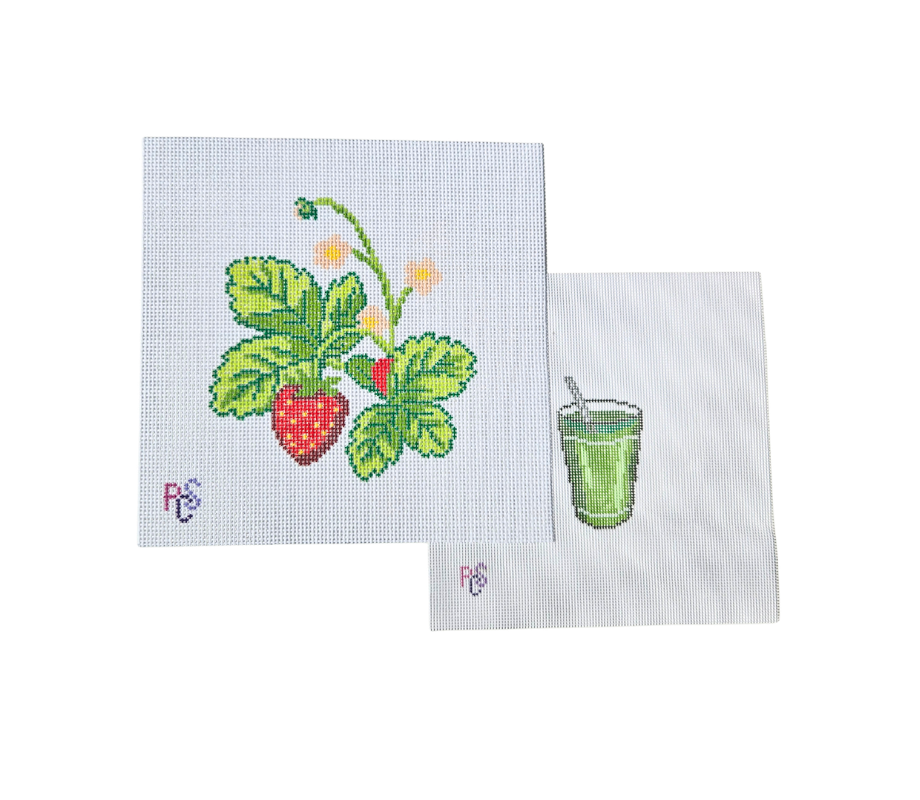
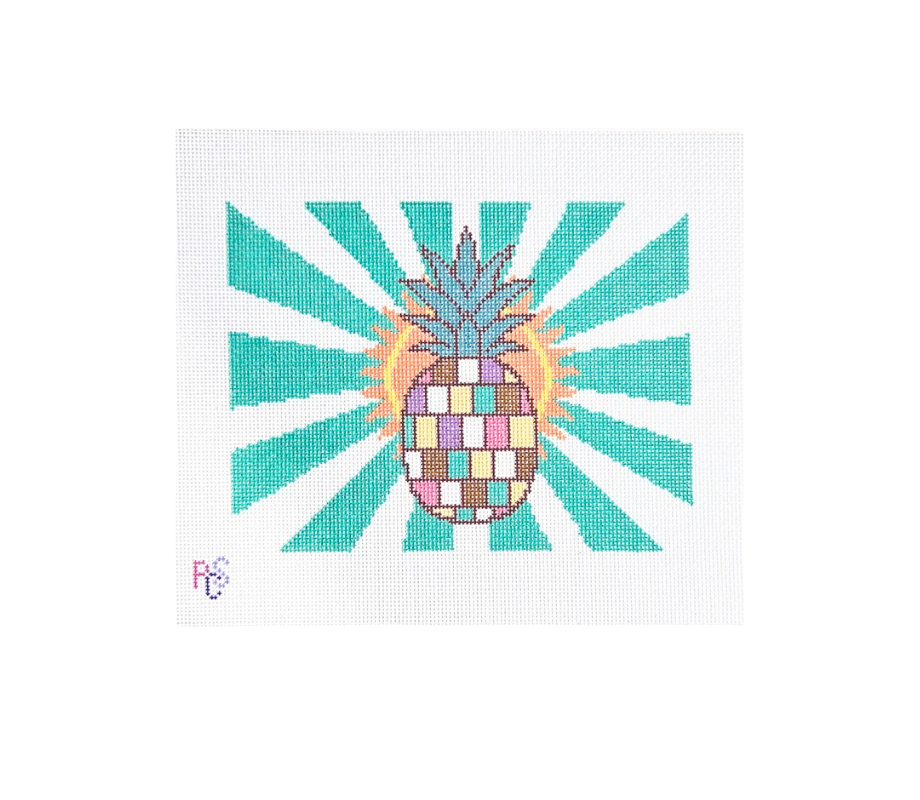
At PointCraftStudio, our canvases are hand-painted with stitch-level precision. That means an artist paints each design by hand while carefully considering the individual intersections of the needlepoint canvas.
The result is the beauty and character of a hand-painted canvas, combined with a clear visual roadmap for your stitches.
In this guide, we'll explain the differences between printed, hand-painted, and stitch-painted needlepoint canvas, why alignment matters, and what to look for when choosing your next needlepoint project or needlepoint kit.
What Is a Needlepoint Canvas?
Before comparing the different types, let's start with the basics.
A needlepoint canvas is the open-weave mesh that you stitch your design onto. Unlike embroidery, where you may stitch directly onto fabric, needlepoint is typically worked on a structured canvas with a regular grid of intersections.
The design can be applied to that canvas in several ways. It can be:
- Printed onto the canvas
- Hand-painted onto the canvas
- Hand-painted with stitch-level precision
That last method is what is commonly called stitch painting.
The way the design is applied can make a noticeable difference in your stitching experience.

1. Printed Needlepoint Canvas
A printed needlepoint canvas has the design applied through a printing process rather than painted directly onto the canvas by an artist.
One of the biggest advantages of printed canvas is its lower price.
Because the design can be reproduced efficiently, printed needlepoint canvases are generally less expensive to produce than hand-painted canvases. This can make them an attractive option if you're looking for an affordable way to try needlepoint.
But price isn't the only thing to consider.
Why Canvas Alignment Matters
Needlepoint is worked through the intersections of the canvas.
Ideally, the design you're looking at should correspond clearly with those intersections so you know exactly where each colour belongs. When a printed design isn't properly aligned with the canvas grid, the stitching experience can become frustrating.
You may find yourself wondering:
- Where exactly does this color change?
- Should this intersection be pink or red?
- Does this line belong one stitch to the left?
- Should I follow the printed image or the canvas grid?
- Is this detail supposed to be one stitch wide or two?
Instead of simply stitching, you may have to interpret the printed design as you go.
For an experienced stitcher, that extra interpretation may not be a problem. But for a beginner, or anyone who wants a relaxing, straightforward stitching experience, it can take some of the enjoyment out of the project.
A Printed Canvas Can Be Beautiful - But Precision Matters
It's important to say that printed needlepoint canvas isn't automatically bad.
A well-produced printed canvas can be attractive and enjoyable to stitch.
The issue is that the quality of the stitching experience depends heavily on the printing process and how accurately the design is aligned with the canvas mesh.
A beautiful image doesn't necessarily make a good needlepoint canvas.
The design needs to work with the canvas, not simply sit on top of it.

2. Hand-Painted Needlepoint Canvas
A hand-painted needlepoint canvas is painted directly onto the canvas by an artist.
Instead of mechanically reproducing the design, the artist applies the colors and details by hand.
This creates a more artistic and individual approach to the canvas.
A hand-painted canvas can also give the stitcher more creative freedom: to use different threads, experiment with specialty stitches, change colours, add texture, interpret shading differently, choose your own stitch direction, and create your own version of the original design.
But there is an important distinction: Not every hand-painted canvas is stitch-painted.
A canvas can be beautifully hand-painted while still leaving some areas open to interpretation.
For example, an artist may paint a gradient or curved area where more than one colour touches a single canvas intersection. The stitcher then has to decide which colour to use at that point.
That can be wonderful for an experienced stitcher who enjoys artistic freedom. But if you want a more precise guide, there's another option.

3. Stitch-Painted Needlepoint Canvas
This is where stitch-painted needlepoint canvas comes in: stitch-painted canvas is hand-painted by an artist with the individual canvas intersections in mind.
Rather than simply painting an illustration onto the mesh, the artist carefully maps the design onto the structure of the needlepoint canvas.
The goal is simple: Each stitch should have a clear place in the design.
The artist pays attention to where colours begin and end, how outlines move across the canvas, and how the finished design will look once the painted areas are covered with thread.
Hand-Painted by an Artist & Painted With the Stitch in Mind.
This is what we mean at PointCraftStudio when we call our canvases stitch-painted.
Our needlepoint canvases are hand-painted by artists, but the artist isn't simply transferring a picture onto mesh. They have to think about the needlepoint process:
- Where will the color change?
- How many canvas intersections does that detail occupy?
- How will the outline translate once it's stitched?
- Will the design remain clear when the painted canvas is covered with thread?
These details matter. The artist is thinking about both the artwork and the stitcher.
That's why we describe our canvases as hand-painted with stitch-level precision.
So Why Does Stitch-Level Precision Matter?
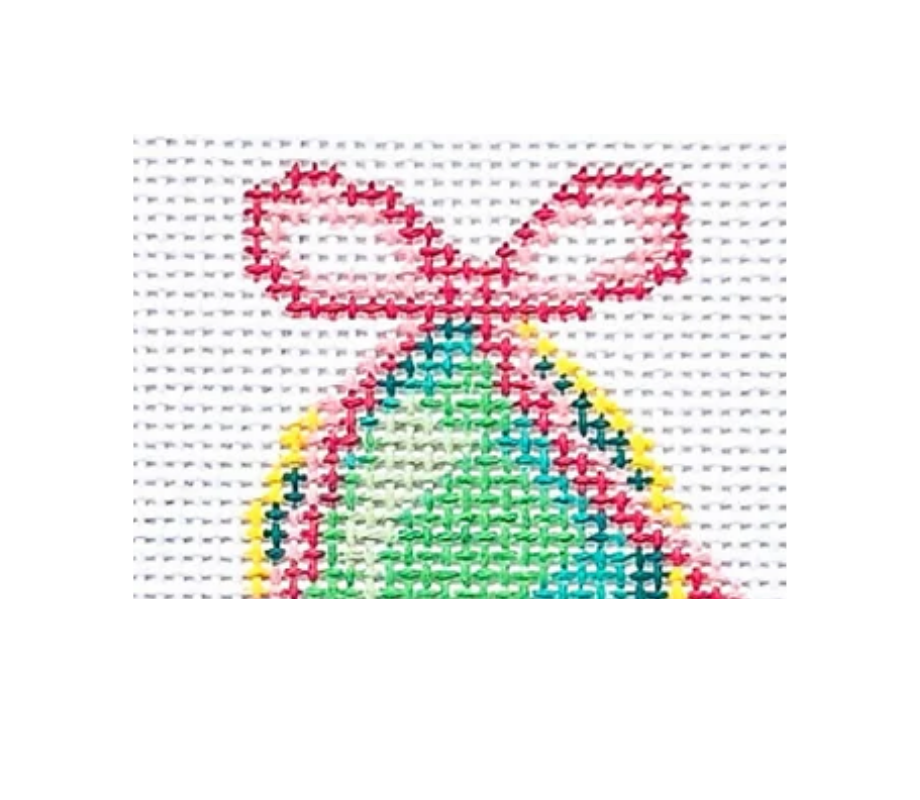
Imagine you're stitching a small flower. You can see that the flower is pink, the leaves are green, and the center is yellow.
But now imagine that the pink printed area doesn't line up perfectly with the canvas intersections.
- You might have to decide where the pink should start.
- You might need to move a line by one stitch.
- You may even have to make decisions that weren't part of the original design.
Now, if the same flower on a stitch-painted canvas:
- The artist has already considered the canvas intersections.
- The color boundaries have been carefully planned around the grid.
- You can look at the canvas and immediately understand what you're supposed to stitch.
Less guessing. More stitching. That's the experience we want to create.
Why Printed Canvas Is Usually Less Expensive
One of the reasons people choose printed canvas is simple: cost.
Printing allows designs to be reproduced more efficiently than painting each canvas by hand. That means you can often find printed needlepoint canvas at a lower price. For someone who wants to experiment with needlepoint or is looking for a simple project, that can be appealing.
But when comparing prices, it's worth considering what you're actually paying for.
With a hand-painted or stitch-painted canvas, you're paying not only for the mesh and design, but also for the artist's time, attention, and craftsmanship. A stitch-painted canvas requires the artist to work carefully with the individual intersections of the canvas. That takes time. And that precision is part of the value.
Why We Choose Stitch-Painted Canvas at PointCraftStudio
At PointCraftStudio, we believe that a needlepoint canvas should do two things:
Look beautiful and be enjoyable to stitch: that's why we choose stitch painting.
Our designs are hand-painted by artists who pay attention to the structure of the needlepoint canvas.
The artist considers individual intersections, color placement, outlines, and details so that the finished design translates naturally from paint to thread.
We're not interested in simply putting a pretty picture on canvas. We want to create a canvas that was made for stitching.
The Artist Has to Think Like a Stitcher
Stitch painting is a little different from simply painting a picture:
- A painter can think about curves, gradients, shadows, and blended colors.
- A needlepoint artist has to think about those things within a grid.
- A curved line has to work across individual canvas intersections.
- A tiny detail may only have room for one or two stitches.
- A color transition needs to make sense once thread covers the painted canvas.
The artist has to constantly think: How will this look when it is stitched?
That's what makes stitch-painted needlepoint canvas so special.
It's where art and needlepoint technique meet.
Now, does Stitch-Painted Mean Every Stitch Is Literally Painted?
No.
This is an easy misunderstanding. The artist isn't painting the actual stitches or painting individual pieces of thread. Instead, the artist paints the canvas according to the individual intersections where the stitches will go.
Think of it as creating a map.
The artist carefully maps the colors onto the needlepoint canvas so that you can use that map while stitching. That's why stitch-painted is the most useful term. The painting is created with the stitches in mind.
Is Stitch-Painted Needlepoint Canvas Good for Beginners?
Yes.
One of the biggest benefits of stitch-painted canvas is that it can make a project easier to understand. If you're learning needlepoint, you already have plenty to think about:
- How to hold your needle
- How much thread to use
- Which stitch to learn
- How to keep your tension consistent
- How to move around the canvas
You shouldn't also have to spend your time wondering which color belongs on a particular intersection.
A stitch-painted canvas gives you a clear visual guide that allows you to focus on learning and enjoying the craft.
Also, being beginner-friendly doesn't mean the canvas is limiting. You can still make plenty of creative choices.
Stitch-Painted Doesn't Mean You Can't Be Creative
A precise canvas is a guide, not a rulebook. Even when the colors are carefully mapped out, you can still make the project your own.
You can experiment with:
- Different Threads: Try wool, cotton, silk, metallics, or specialty fibers to change the texture and appearance.
- Specialty Stitches: Use decorative stitches to add dimension and interest to selected areas.
- Color Changes: Want to make the flower blue instead of pink? Go for it.
- Stitch Direction: Changing stitch direction can create subtle differences in texture and light.
- Backgrounds: The background is often a wonderful opportunity to introduce your own personality.
What Is the Difference Between a Needlepoint Canvas and a Needlepoint Kit?
If you're shopping for needlepoint, you may also see the terms needlepoint canvas and needlepoint kit used interchangeably.
They aren't the same thing.
A needlepoint canvas is the actual mesh with the design painted or printed onto it. A needlepoint kit usually includes the canvas plus some or all of the materials needed to stitch it.
Depending on the kit, this may include:
- Needlepoint canvas
- Thread or fiber
- Tapestry needle
- Stitch guide
- Instructions
- Other project-specific materials
A kit can be especially convenient if you're new to needlepoint. Instead of researching which threads to buy and how much fiber you'll need, you can simply open your kit and start stitching.
Why a Stitch-Painted Needlepoint Kit Can Be a Great Choice
If you're buying your first needlepoint kit, a stitch-painted canvas can remove some of the guesswork.
- You don't have to figure out where the colors belong.
- You don't have to count every section of the design.
- You don't have to interpret an image that doesn't quite line up with the canvas.
The canvas gives you a visual roadmap. Your job is to pick up the needle and enjoy the process. That's exactly how we want needlepoint to feel.
How to Choose the Right Needlepoint Canvas
When you're shopping for your next canvas, don't look only at the design, consider the stitching experience you're looking for.
Choose a Printed Canvas If You:
- Want a lower-cost option
- Enjoy interpreting designs
- Don't mind making decisions while stitching
- Find a particular printed design appealing
- Want to experiment with needlepoint
Choose a Traditional Hand-Painted Canvas If You:
- Love the artistry of painted designs
- Enjoy creative interpretation
- Want freedom with colors and stitches
- Like choosing your own approach to the design
Choose a Stitch-Painted Canvas If You:
- Want clear color placement
- Prefer a precise visual guide
- Are new to needlepoint
- Don't want to spend time interpreting color boundaries
- Want the artistry of a hand-painted canvas
- Want a canvas designed specifically with stitching in mind
What to Look for in a Quality Stitch-Painted Canvas
Not all painted canvases are created in exactly the same way.
When you're evaluating a stitch-painted needlepoint canvas, look for:
- Clear Color Placement: You should be able to tell where one color ends and another begins.
- Thoughtful Details: Small details should be considered in relation to the canvas grid.
- Clean Outlines: Lines and shapes should translate naturally into stitches.
- Consistent Painting: The paint should be applied carefully without unnecessarily obscuring the canvas holes.
- A Design That Makes Sense When Stitched: Ultimately, the most important question is: Does the canvas work as a needlepoint design? A beautiful image is only the beginning.
Why the Needlepoint Experience Matters
It's easy to compare needlepoint canvases based on price. You see one canvas for $30 and another for $80 and wonder why they're so different. But the canvas isn't just an object you're purchasing.
It's the foundation of the hours you'll spend stitching.
If the design is difficult to follow, those hours can involve counting, correcting, second-guessing, and frustration. If the design is carefully mapped to the canvas, those same hours can be spent choosing your stitches, enjoying your threads, and watching the artwork come to life.
That's a difference worth considering.
At PointCraftStudio, we care about the experience as much as the finished piece.
Our Approach
Our philosophy is simple: We want the artist to do the precision work so you can enjoy the stitching.
Our canvases are hand-painted but the artist doesn't stop at creating a beautiful image, they carefully consider the individual intersections of the canvas and how each color will translate into stitches.
That means:
- The artwork is hand-painted.
- The color placement is carefully considered.
- The canvas grid matters.
- The stitcher gets a clear guide.
This is what makes our canvases stitch-painted.
From Paint to Thread
There is a special moment when you start stitching a new needlepoint canvas. At first, you're looking at paint. Then you add the first stitch. Then another. Slowly, the design begins to transform.
The painted canvas becomes a stitched artwork. Every thread adds texture. Every stitch adds dimension.
Eventually, the canvas becomes something that exists somewhere between the original artwork and your own creativity.
That's why the canvas matters so much. It is the bridge between the artist's design and your finished piece.
Final Thoughts: Why Stitch-Painted Matters
When choosing a needlepoint canvas, the design is only part of the story.
You should also consider how that design was created and how it will feel to stitch.
A printed canvas can be an affordable way to explore needlepoint, but the stitching experience depends on the quality and alignment of the printed design.
A hand-painted canvas brings the artistry of an artist directly onto the needlepoint mesh and can give you more freedom to interpret the design.
A stitch-painted needlepoint canvas combines those ideas with something extra: precision. The artist hand-paints the canvas while carefully considering the individual intersections and the stitches that will eventually cover them.
At PointCraftStudio, that's the approach we believe in:
- Hand-painted by an artist.
- Painted with stitch-level precision.
- Created for the stitching experience.
Because a needlepoint canvas shouldn't just look beautiful before you start. It should make every stitch feel right.
Frequently Asked Questions
A stitch-painted needlepoint canvas is a hand-painted canvas created with the individual canvas intersections in mind. The artist carefully maps the colors onto the canvas so the stitcher can clearly understand where each color belongs.
Not exactly. Hand-painted describes how the design is applied to the canvas. Stitch-painted describes a more precise approach in which the artist paints with individual canvas intersections and stitches in mind
Yes. PointCraftStudio canvases are hand-painted by artists who pay close attention to color placement and the individual intersections of the needlepoint canvas.
Stitch-painted means that the design is painted with the individual canvas intersections in mind, so the stitcher has a clear indication of where each color should go.
A stitch-painted canvas can be particularly beginner-friendly because it reduces the amount of interpretation required when following the design. Instead of figuring out where colors should go, you can focus on learning and enjoying your stitches.
Printed canvases can be produced more efficiently because the design doesn't have to be individually painted onto each canvas. This generally makes them less expensive than hand-painted canvases.
Not necessarily. A well-produced printed canvas can be a perfectly enjoyable project. The important consideration is how accurately the printed design aligns with the canvas intersections. Poor alignment can make the design more difficult to follow.
Needlepoint stitches are worked through the canvas intersections. If the design isn't aligned clearly with those intersections, you may have to interpret where colors begin and end, which can make stitching more difficult.
Absolutely. A stitch-painted canvas is a guide, not a set of rules. You can change colors, threads, stitches, and textures to make the finished piece your own.
The contents vary by kit, but a needlepoint kit may include a canvas, thread or fiber, tapestry needle, instructions, and a stitch guide.
Yes. A kit can simplify the process by providing many of the materials you need in one package. Pairing a kit with a stitch-painted canvas can make it even easier to get started.